
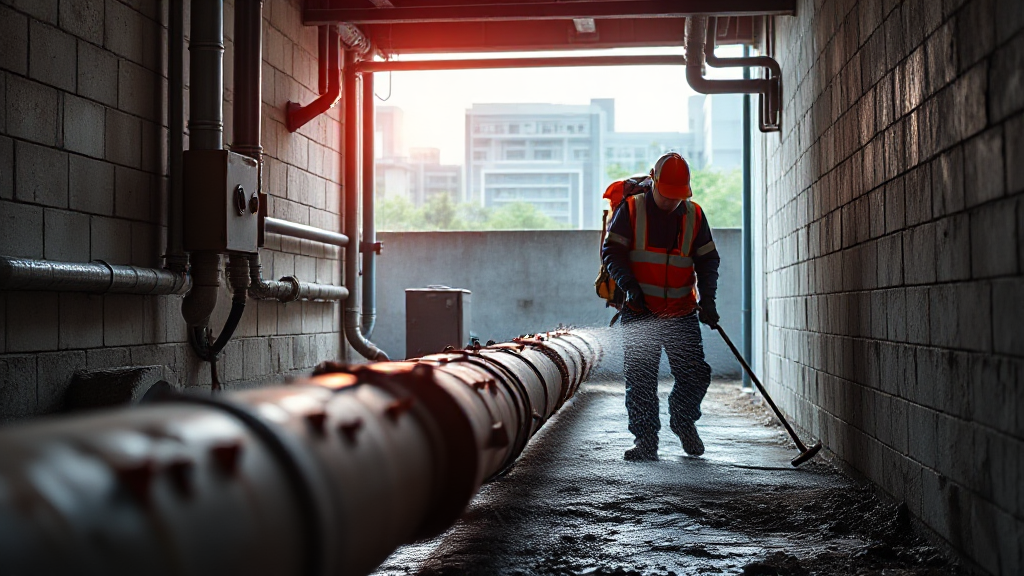
What Old Pipes Mean for Clogs in Lauzane Paulista
Two houses on the same Lauzane Paulista street can behave completely differently when it rains or when the kitchen sink drains. One empties quickly; the other backs up every few months. The difference is rarely the amount of water used. It is usually the material and age of the pipes hidden behind the walls and under the floor. If you own an older property here, understanding what your pipes are made of helps you decide whether to keep calling a desentupidora Limão for repeated unclogging or invest in a more permanent repair.
This materials-by-materials explainer is written for owners of older houses and small commercial buildings in the neighborhood. It covers how cast iron, galvanized steel, clay, PVC and concrete behave over decades, what kinds of clogs each material tends to produce, and how to weigh repair against repeated unclogging.
Why Pipe Material Matters More Than Pipe Diameter
Many people assume a wider pipe always clogs less. In practice, a narrow new PVC pipe with smooth walls can outperform a wider old cast iron pipe that has lost its inner surface. The reason is friction and buildup. Older materials corrode, scale, root-invade or sag, and each of those changes how waste and water move.
In Lauzane Paulista, the housing stock includes buildings from several decades, so the same street can have cast iron from one era, galvanized steel from another and PVC from a recent renovation. That mix explains why a neighbor’s experience with clogs tells you very little about your own drainage. Pipe material, not pipe age alone, predicts how often you will need unclogging.
When a technician from a desentupidora Limão São Paulo SP inspects your line, the first useful question is not “how old is the house?” but “what is the pipe made of, and what condition is its inner wall in?” That answer shapes both the unclogging method and the repair decision.
Cast Iron: Strong but Prone to Scale and Root Intrusion
Cast iron was common in São Paulo buildings for decades and still appears in many older Lauzane Paulista homes. It is durable under pressure, but its inner wall roughens over time. Rust and mineral scale create a rough surface where grease, soap and paper catch. The pipe does not narrow all at once; it narrows gradually, so clogs seem to appear suddenly after years of slow buildup.
What cast iron clogs look like
Cast iron problems usually show up as repeated backups in the same fixture, gurgling sounds from drains, and dark water or rust stains around joints. Tree roots are especially attracted to the joints of old cast iron because moisture escapes through deteriorating seals. A root hair can enter a pinhole and grow into a mat that catches waste.
Unclogging versus repair
Mechanical cleaning and hydrojetting can remove scale and roots from cast iron, but they cannot restore a wall that has cracked or collapsed. If the same section backs up within a few months, repeated unclogging is a temporary fix. A camera inspection is the honest way to decide whether the pipe can be cleaned or should be replaced with PVC.
Galvanized Steel: The Hidden Cause of Slow Drains
Galvanized steel was used for water supply lines and sometimes for drains in mid-century construction. Its zinc coating protects the steel for a while, but once that coating wears away, rust takes over. The result is a pipe that narrows from the inside like a clogged artery. Water still passes, but slowly, and debris settles more easily.
Owners often describe this as “the sink drains but not well.” A plunger or hand snake gives temporary relief, then the slow drain returns. Galvanized steel also tends to fail at threaded joints, where rust weakens the connection first. If your slow drain is in an older wall and the pipe is galvanized steel, repeated unclogging will not solve the underlying narrowing.
In these cases, a desentupidora em Limão São Paulo SP may recommend replacing the accessible section rather than cleaning it again. The decision depends on how much of the line is affected and whether the pipe is behind a wall or under a slab.
Clay and Concrete: Roots, Joints and Ground Movement
Clay tile and concrete pipes were common in older underground drainage, including yard drains and sewer laterals. They are rigid, so they do not sag like plastic, but they rely on joints that can separate as the ground shifts. Tree roots find those joints quickly. Once roots enter, they trap grease and solids, and the clog forms at the joint rather than in the middle of the pipe.
Signs of clay or concrete trouble
Look for backups that happen after heavy rain, soggy patches in the yard, and clogs that return at the same spot. A camera inspection can show whether the joint is just root-infested or whether the pipe has cracked and shifted. Cleaning roots from clay pipe is possible, but the roots will return unless the joint is repaired or the line is replaced.
When replacement makes sense
If a clay or concrete lateral has multiple separated joints or a collapsed section, repeated unclogging becomes a cycle. Replacing that run with PVC usually costs more upfront but ends the recurring emergency calls. For a single root intrusion at one joint, cleaning and spot repair may be enough.
PVC and Modern Plastics: Smooth but Not Immune
PVC is smooth, resistant to corrosion and less likely to scale, which is why it is the default choice for repairs and new construction. In Lauzane Paulista, many older homes have had at least partial PVC replacements. PVC clogs are usually caused by what goes into the pipe rather than by the pipe itself: grease, wipes, hair and food waste.
That said, PVC is not indestructible. Poorly glued joints can separate, and pipes under slabs can sag if support was inadequate. A PVC line that clogs repeatedly may have a belly where water stands, or a joint that was never properly sealed. Smooth walls reduce friction, but they do not prevent clogs caused by what is flushed or poured down the drain.
For PVC, the repair decision is usually simpler: if the clog is caused by debris, unclogging solves it. If the camera shows a sag or separated joint, a targeted repair is the better long-term answer.
How Aging Materials Change the Unclogging Method
The same tool does not suit every pipe. A method that works well in new PVC can damage fragile cast iron or clay. This is why a professional assessment matters before any equipment goes into the line.
| Pipe material | Common clog cause | Typical cleaning approach | Repair trigger |
|---|---|---|---|
| Cast iron | Scale, rust, roots at joints | Mechanical cleaning or hydrojetting | Cracks, collapses, repeated same-spot clogs |
| Galvanized steel | Internal rust narrowing | Limited; often replacement | Persistent slow flow, joint failure |
| Clay or concrete | Roots at separated joints | Root cutting, hydrojetting | Multiple bad joints, collapse, shifting |
| PVC | Grease, wipes, hair, food | Snaking, hydrojetting | Sagging, separated glued joints |
A camera inspection is the step that turns guesswork into a decision. It shows the material, the condition of the inner wall and the exact location of the problem. Without it, an owner may keep paying for unclogging while the real issue, such as a cracked clay joint or a rusted steel line, gets worse.
Repair or Keep Unclogging? A Decision Framework for Older Properties
The decision is not about whether repair is always better. It is about frequency, cause and consequence. Use these questions to weigh the options honestly.
- How often does the same line clog? Once every few years is normal wear. Several times a year in the same section points to a structural problem.
- Is the cause debris or deterioration? Debris clogs respond well to cleaning. Deterioration, such as rust narrowing or root-infested joints, returns until repaired.
- What is at risk if it fails? A line under a slab or near a foundation raises the cost of waiting. An accessible yard line is easier to repair later.
- What does the camera show? A clear PVC line with a grease clog is a cleaning job. A collapsed clay section is a replacement job.
- What is the total cost over time? Add up emergency calls, damaged belongings and repeated disruption. Compare that with a one-time repair.
For many older Lauzane Paulista properties, the practical answer is a hybrid: clean the line now, inspect it with a camera, and replace only the sections that are genuinely failing. That approach avoids unnecessary demolition while ending the cycle of emergency calls.
If you are unsure which material your pipes are made of, start with an inspection rather than another plunger. The right decision depends on evidence, not on guesswork, and the evidence is inside the pipe.

Leave a Reply